
Publications
Resources for Movers, Educators, and Curious Minds
-

Express Dance
The Express Dance method is designed for high school levels and offers a safe, creative and physically invigorating program of movement classes. Teachers with no background in dance can use the Express Dance Method and feel confident in meeting curriculum requirements and expectations. Allen and Karen Kaeja developed this method through their teaching experience in high schools firmly believing that, “Dance is human gesture and gesture has been the principal mode of communication among human beings since the beginning of time. Express Dance in not an attempt to provide dance training, but to help students understand their physical potential and how that potential can be used as a means of self-expression.”
-

I Found My Dance In a Bomb Shelter – Anecdotes of Gratitude from A Life in Dance
I Found My Dance in a Bomb Shelter: Anecdotes of Gratitude from A Life in Dance is filled with stories about the people and encounters that have shaped Allen Kaeja as a son, brother, husband, father, and artist. From childhood antics to youthful years of elite wrestling competitions and then the epiphany of following his passion for dance, Allen’s life is a story of discovery and the courage to push boundaries. Through it all weaves a thread of intergenerational trauma as the son of a Holocaust survivor. These anecdotes will amuse, inspire, and move all those who read this engaging book about a life well lived, the importance of family, and the power of community.
-
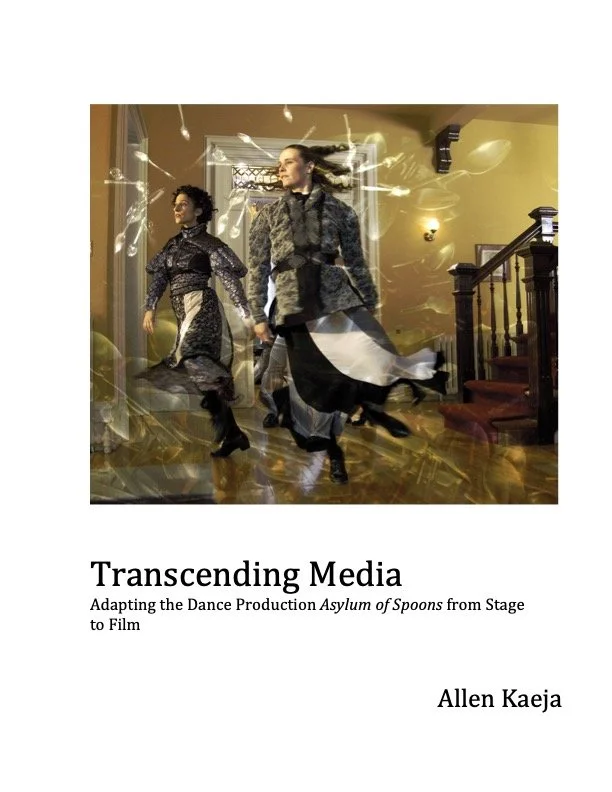
Transcending Media: Adapting the dance production Asylum of Spoons from Stage to Film
This book presents the pre-production materials used to adapt the dance production of Asylum of Spoons (2004) from the stage into a dance film. It was the first dance film in Bravo Canada s history to be short-listed for the Jury s Grand Prize at the Banff World Television Awards. Screenplays for dance film require a new language that has yet to be defined. The challenge was to analyze the stage work, deconstruct it into sequences, then further dissect each sequence into a series of theatrical, emotional and physical moments that, form dramatic arcs. These became the basis for filming the work, for determining how the eye of the camera would interpret the dance.